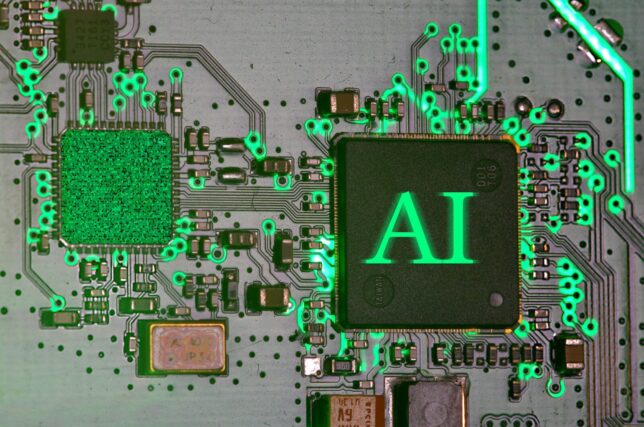
Welcome to the Age of Artificial Intelligence. Artificial intelligence (AI) is no longer a futuristic concept reserved for science fiction. It is already transforming how we communicate, work, learn, shop, manage businesses, and solve complex problems. From virtual assistants and automated customer service to medical research and advanced robotics, AI is becoming an increasingly important part of modern life. But what will artificial intelligence look like over the next decade?
Between 2026 and 2036, AI could become more capable, more accessible, and more deeply integrated into everyday activities. It may help doctors identify diseases earlier, enable businesses to operate more efficiently, personalize education, accelerate scientific discoveries, and support solutions to global challenges. At the same time, these developments will raise important questions about employment, privacy, security, fairness, and the relationship between humans and machines.
Understanding these trends is essential for entrepreneurs, professionals, students, business leaders, and anyone who wants to prepare for the future. Let’s explore seven important AI trends to watch in the next decade—and what they could mean for your life, career, and business.
1. More Powerful and Accessible AI Assistants
One of the most visible developments will be the evolution of AI assistants. Today’s AI tools can answer questions, summarize documents, generate ideas, write content, analyze information, and help users solve problems. Future assistants may become better at understanding context, remembering user-approved preferences, coordinating complex tasks, and working across different applications. Instead of asking an AI assistant to complete one small task at a time, people may increasingly delegate entire workflows.
For example, an entrepreneur could use an AI assistant to research a market, organize customer feedback, draft a marketing campaign, prepare financial projections, and schedule follow-up tasks. Human oversight would remain important, particularly when decisions involve money, legal obligations, or sensitive information. These capabilities could make sophisticated tools available to individuals and small businesses that previously lacked the resources to hire large teams.
What this means for you: Learn how to use AI to improve your productivity. Experiment with research, planning, writing, analysis, and repetitive administrative tasks. Focus on understanding the problems you want to solve rather than simply learning individual tools. The greatest advantage will not necessarily belong to those who use the most AI. It may belong to those who know how to combine AI capabilities with sound judgment and practical experience.
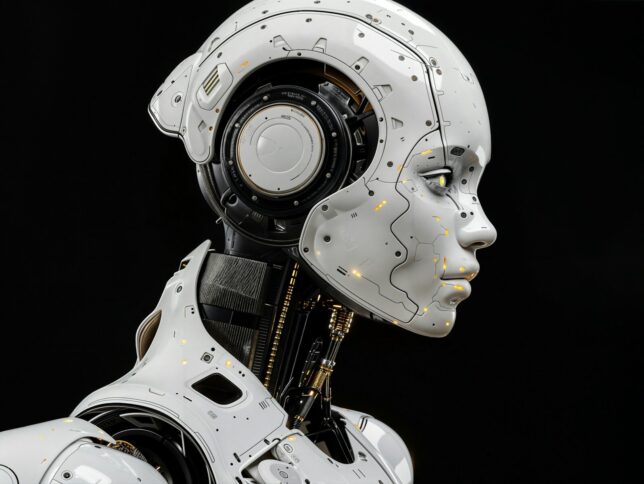
2. AI Will Transform Healthcare and Scientific Discovery
Healthcare is another field where AI could make a substantial difference.
AI systems can already assist researchers with analyzing medical images, identifying patterns in health data, studying potential treatments, and accelerating certain stages of drug discovery. Over the next decade, improvements in these capabilities could support earlier disease detection and more personalized treatment decisions.
Imagine a healthcare system in which doctors can combine medical history, laboratory results, imaging, and other relevant information to identify potential health risks more efficiently.
AI-powered monitoring devices may also help people track selected health indicators and recognize changes that deserve medical attention.
However, technological progress does not mean that AI can replace medical professionals. AI-generated recommendations can be inaccurate, incomplete, or biased, and sensitive health information must be protected.
Clinical validation, privacy safeguards, and professional oversight will remain essential.
What this means for you: Use reliable digital health tools to support—not replace—professional medical care. Ask questions, protect your health information, and seek qualified medical advice before making important treatment decisions. The long-term opportunity is to use technology to support better-informed healthcare, improve access to services, and help professionals spend more time caring for patients.
3. AI Will Reshape Jobs, Skills, and the Future of Work
Few AI trends will affect individuals as directly as changes in employment. AI can automate certain repetitive tasks, including data entry, basic document processing, routine customer inquiries, and parts of content production. As these systems improve, organizations may redesign jobs and workflows around a combination of human expertise and machine assistance. Some existing roles may shrink or disappear, while new roles and opportunities emerge. Many jobs will change rather than vanish entirely.
Consider a marketing professional. Instead of spending hours preparing initial drafts, the professional may use AI to generate options, analyze campaign results, and organize research. The human contribution becomes more focused on strategy, creativity, audience understanding, and evaluating the quality of the output. This transition will not be equally easy for everyone. Workers may need retraining, employers will need to rethink workforce development, and policymakers will face difficult questions about economic security and access to opportunity.
Skills likely to remain valuable include:
- Critical thinking and sound judgment.
- Communication and relationship building.
- Creativity and problem-solving.
- Leadership, collaboration, and emotional intelligence.
- AI literacy, data interpretation, and digital adaptability.
What this means for you: Make continuous learning part of your personal development plan. Identify the tasks in your profession most likely to be affected by AI, then learn how to use the technology responsibly. Rather than competing with AI at tasks it can perform efficiently, develop the uniquely human capabilities that help you make better decisions, understand people, and solve meaningful problems.

4. AI Will Create New Opportunities for Entrepreneurs
Artificial intelligence could significantly lower the barriers to starting and growing a business. Traditionally, launching a company often required substantial resources for research, marketing, customer support, administration, and technical development. AI tools can help entrepreneurs perform some of these activities more quickly and at lower initial cost.
A solo entrepreneur, for instance, might use AI to:
- Research customer needs and competing products.
- Develop a business plan and test different business ideas.
- Create first drafts of website copy and marketing materials.
- Organize customer inquiries and frequently asked questions.
- Analyze sales information and identify possible trends.
- Develop educational materials and customer resources.
These tools can help individuals operate more efficiently, but they do not guarantee profitability. Businesses still need real customers, a compelling value proposition, sound financial management, and consistent execution. AI-generated market research can also be misleading, so important assumptions should be checked against reliable sources and actual customer feedback. The most promising opportunities may emerge where AI is combined with specialized knowledge. An expert in education, healthcare administration, logistics, personal development, or another field may be able to build better solutions by applying AI to a clearly defined problem.
What this means for you: Start by identifying one problem people genuinely need solved. Use AI to research possible solutions, develop a simple prototype, gather feedback, and improve the offer.
Do not begin by asking, “What can AI do?” Begin by asking, “What valuable problem can I solve with AI?”
5. AI Will Become More Integrated Into Everyday Life
In the coming decade, AI may become less visible as a separate application and more common as an underlying feature of products and services. Smartphones, vehicles, home devices, educational platforms, and business software may increasingly use AI to anticipate needs, personalize experiences, and automate routine activities. Smart homes could coordinate heating, lighting, and energy consumption more efficiently. Transportation systems may use AI to improve traffic management and assist drivers. Digital learning platforms may adapt lessons to a student’s progress and provide additional explanations when needed.
AI-powered translation could also make communication easier across languages, potentially improving access to education, information, and international collaboration. However, greater convenience may come with trade-offs. Systems that collect extensive personal data can create privacy risks, while excessive automation can reduce opportunities for independent decision-making. Connected devices may also become targets for cyberattacks if their security is inadequate.
What this means for you: Choose technologies that provide genuine value. Review privacy settings, secure your accounts, understand what information your devices collect, and avoid granting unnecessary permissions. The objective should be to make technology serve your priorities—not to surrender control of your daily life to automated systems.

6. AI Could Help Build a More Sustainable Planet
Climate change, resource scarcity, energy demand, and environmental protection are complex challenges that require better information and coordinated action. AI could contribute by helping researchers analyze climate data, improve weather forecasting, optimize electricity networks, reduce industrial waste, and support more efficient agricultural practices.
For example, AI-assisted agricultural systems may help farmers identify crop stress, monitor soil conditions, and use water more precisely. Energy providers may use predictive systems to balance electricity supply and demand, while buildings may use intelligent controls to reduce unnecessary energy consumption. AI could also help scientists process large datasets and identify patterns relevant to environmental research.
Nevertheless, AI is not automatically environmentally friendly. Training and operating large models can consume substantial electricity and water, and the production of computing hardware requires materials and energy. The overall environmental impact depends on how systems are designed, powered, deployed, and evaluated.
What this means for you: Look for practical applications that reduce waste, conserve resources, and improve efficiency. Support organizations that measure their environmental impact rather than relying on broad claims about being sustainable. The opportunity is not simply to build more intelligent technology. It is to use technology in ways that create measurable benefits for people and the planet.
7. Responsible AI, Ethics, and Human Trust Will Become Essential
As AI becomes more capable, society will need stronger ways to ensure that it is used responsibly. Important concerns include misinformation, deepfakes, privacy violations, biased decisions, cybersecurity threats, intellectual property disputes, and the possibility of people relying too heavily on automated recommendations.
Imagine an AI system helping an employer evaluate job applicants or assisting a financial institution with lending decisions. If the system uses incomplete data or reproduces historical discrimination, its decisions could disadvantage certain people.
Similarly, AI-generated images, audio, and video can make fabricated content appear authentic. This creates challenges for journalism, education, elections, businesses, and personal relationships. Addressing these problems will require a combination of technical safeguards, appropriate laws, organizational accountability, transparency, and public education. Individuals also have a role to play.
Before trusting an AI-generated claim, check important facts. Before sharing a realistic image or video, consider whether it could be manipulated. Before uploading confidential information, understand how the service handles your data. Organizations should clearly identify where AI is used when disclosure is important, establish human review for consequential decisions, and create processes for correcting mistakes.
What this means for you: Develop the habit of using AI with curiosity and caution. Verify consequential information, protect personal data, and remember that an answer delivered confidently is not necessarily correct. Trustworthy AI will depend not only on what systems can do, but also on how responsibly people and institutions use them.
8. Human Creativity and AI Will Work Together
AI is already changing creative work by helping people generate ideas, draft text, create images, compose music, edit videos, and explore alternative designs. Over the next decade, these capabilities may become more sophisticated and easier to use. People with limited technical experience may be able to turn ideas into prototypes, stories, presentations, or educational products with fewer barriers.
For writers, AI may help with brainstorming, research organization, and editing. Designers may use it to explore concepts rapidly. Educators may develop more varied learning materials, while entrepreneurs may test marketing ideas before investing heavily in production.
Yet creative work involves more than generating an output. Human creators contribute lived experience, cultural understanding, taste, intention, and the ability to recognize what matters to a particular audience. Questions about copyright, consent, attribution, and fair compensation will also influence how creative industries adapt.
What this means for you: Treat AI as a creative partner, not a substitute for developing your own abilities. Use it to explore possibilities, challenge assumptions, and speed up routine work, while retaining responsibility for the final result. The most meaningful creative advantage may come from combining human originality with AI-assisted experimentation.
How to Prepare for the AI-Powered Future
Understanding future trends is useful, but preparation requires action. You do not need to become a computer scientist to benefit from AI. You need a willingness to learn, experiment, and adapt.
Here are five practical steps you can begin taking today.
1. Build your AI literacy. Learn what common AI tools can do, where they fail, and how to verify their outputs. Start with applications relevant to your work or personal goals.
2. Strengthen your human skills. Invest in communication, critical thinking, leadership, creativity, and emotional intelligence. These skills help you direct technology toward useful outcomes.
3. Experiment with real problems. Choose a repetitive task or persistent challenge. Test whether AI can help you complete it more effectively, and measure the results.
4. Protect your privacy and judgment. Avoid sharing sensitive information unnecessarily. Verify important claims and keep human oversight in decisions with significant consequences.
5. Commit to continuous learning. Technology will continue to evolve. Set aside time each week to learn a new skill, test a tool, or examine how developments in AI affect your industry.
You do not need to predict every technological breakthrough. You need a learning process that helps you respond intelligently when change arrives.
Conclusion: The Future of AI Is Also the Future We Choose
The next decade could bring extraordinary developments in artificial intelligence. More capable assistants, advances in healthcare, changing workplaces, new entrepreneurial opportunities, smarter homes, environmental applications, and creative collaboration may transform many aspects of society. But technological progress alone does not guarantee human progress. The benefits of AI will depend on how effectively we manage its risks, distribute its opportunities, protect individual rights, and preserve human responsibility.
For individuals, the challenge is to remain adaptable without losing sight of personal values. For businesses, it is to use AI to create genuine value rather than adopt technology simply because it is fashionable. For society, it is to encourage innovation while ensuring that safety, fairness, and accountability remain priorities.
My perspective is simple: the future belongs not necessarily to the people who know the most about AI today, but to those who remain curious, learn continuously, think critically, and apply new capabilities with purpose.
You cannot control every technological change, but you can control how you prepare for it.
Start learning. Experiment thoughtfully. Build valuable skills. Use technology to solve meaningful problems. The future of AI is unfolding now—and the choices we make today will help determine what it becomes tomorrow.