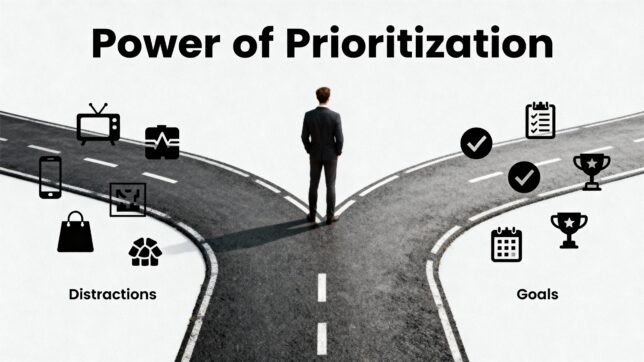
Some men are controlled by what they want. Others are guided by who they have decided to become. The difference between them is self-mastery. There is a profound truth in the statement:
“The man who can walk away from what he desires for the sake of what he must become is a man no one can own.”
This statement speaks to the heart of discipline, character, personal growth, and freedom. It describes a man who has learned that not everything he desires deserves his attention, not every opportunity deserves his participation, and not every pleasure is worth the price he may eventually pay. He understands that becoming the man he is capable of being requires difficult choices. Sometimes, he must sacrifice immediate pleasure for long-term fulfillment. Sometimes, he must leave behind relationships, habits, environments, and opportunities that conflict with his values and vision. This is not a man who has no desires. He is a man who refuses to become a prisoner of them. He knows what he wants, but he also knows what matters more. And that knowledge changes everything.
1. He Understands That Desire Is Not a Command
Every man experiences desire. We desire comfort, recognition, money, pleasure, companionship, success, and the satisfaction of having what we want. These desires are natural. They can motivate us to work harder, pursue meaningful relationships, and create better lives. But desire becomes dangerous when it begins making our decisions for us. A man who cannot resist immediate gratification may sacrifice his health for pleasure, his financial future for unnecessary purchases, his integrity for approval, or his ambitions for temporary comfort. He may know exactly what he should do, yet repeatedly choose what feels good in the moment.
The disciplined man takes a different approach. He understands that wanting something does not automatically make it good for him.
He can desire something without pursuing it. He can feel temptation without surrendering to it. He can experience disappointment without abandoning his principles. This is the beginning of self-mastery: learning to create space between what you feel and what you choose to do. When you develop this ability, your emotions remain part of your experience, but they no longer have to control your direction. You become the man who makes decisions according to his values rather than his impulses.

2. He Chooses His Future Over His Immediate Comfort
Every meaningful ambition requires a price. If you want to build a successful business, you may need to sacrifice unnecessary spending, invest time in learning, and work consistently before the results become visible. If you want to become physically stronger, you must accept the discomfort of exercise and the discipline of healthy routines. If you want to develop financial independence, you may need to resist the pressure to impress others through possessions you cannot comfortably afford. If you want to become a better husband, father, leader, or friend, you must sometimes put aside your ego and choose patience, responsibility, and understanding.
Growth frequently asks you to exchange something attractive today for something more valuable tomorrow. The man who understands this does not organize his life around avoiding discomfort. He organizes his life around becoming the person he respects. He asks himself a powerful question:
Will this decision bring me closer to the man I want to become, or will it keep me attached to the man I am trying to outgrow?
That question can change the way you spend your time, manage your money, build relationships, and pursue your ambitions. It reminds you that every choice contributes, in some way, to the direction of your life. You cannot control every circumstance, but you can become more intentional about the choices within your control.
3. He Has a Vision Stronger Than His Temptations
A man without a clear vision can easily become distracted by whatever attracts his attention. One day, he pursues wealth. The next, he seeks recognition. Then he becomes preoccupied with other people’s opinions, comparisons, and expectations. His energy becomes scattered because he has not clearly defined what success means to him. The man who cannot be owned has a different relationship with his future. He has taken time to consider who he wants to become, what he wants to contribute, which values he refuses to compromise, and what kind of life he wants to build.
His vision becomes a standard against which he evaluates his decisions. When an opportunity appears, he does not ask only whether it will benefit him. He also asks whether it aligns with his purpose. When a temptation presents itself, he considers not only the pleasure it promises but also the consequences it may bring. When other people pressure him to follow their expectations, he remembers the direction he has chosen for himself. A clear vision does not eliminate temptation. It gives you a reason to resist the temptations that conflict with your priorities.
When you know what you are building, you become more willing to walk away from what threatens to destroy it.
4. He Refuses to Sell His Integrity for Acceptance
One of the most subtle forms of captivity is the need to be accepted by everyone. A man who depends on approval may compromise his beliefs to avoid criticism. He may remain in unhealthy situations because he fears being alone. He may agree with people he disagrees with or pursue a lifestyle that impresses others while leaving him personally unfulfilled.
Eventually, he risks losing his identity in the effort to maintain other people’s approval. The self-directed man understands that respect is valuable, but it cannot be purchased at the cost of his integrity. He does not deliberately seek conflict, and he does not reject advice simply to prove his independence. He listens, reflects, and remains willing to correct his mistakes. But he does not allow the fear of disappointing others to become the foundation of his decisions.
He can say no without hatred. He can disagree without disrespect. He can leave a situation that violates his values without needing to humiliate the people involved. He understands that not everyone will approve of his choices, and he no longer treats universal approval as a requirement for living a meaningful life. His freedom comes from knowing that he can respect others without surrendering responsibility for his own decisions.

5. He Can Walk Away From What He Loves When It Conflicts With His Growth
Perhaps the most difficult test of self-mastery comes when the thing you must leave behind is something you genuinely desire. It is relatively easy to reject what you do not want. It is much harder to release something that gives you pleasure, comfort, excitement, or a sense of belonging. You may love the familiarity of an old habit even when it prevents you from progressing. You may enjoy the attention of people who encourage your worst tendencies. You may feel attached to a business opportunity that promises quick money but demands compromises you cannot accept.
In such moments, the question is not whether the desire is real. The question is whether pursuing it is consistent with the life you are trying to build. A mature man recognizes that something can be attractive without being appropriate for him. Something can feel good without being good for his future. Something can be difficult to leave without being necessary to keep.
However, this principle must be understood wisely. Walking away does not mean abandoning every relationship that challenges you, every responsibility that becomes uncomfortable, or every dream that requires patience. Healthy relationships and worthwhile ambitions often demand sacrifice, communication, compromise, and perseverance. The important distinction is between discomfort that helps you grow and a situation that persistently undermines your values, well-being, or future. Sometimes, growth requires you to stay and do the difficult work. At other times, it requires you to leave. The strength lies in knowing the difference.
6. He Masters Himself Before Trying to Control His Circumstances
Many people spend their lives attempting to control things that were never entirely within their power. They try to control what others think, how quickly success arrives, whether everyone likes them, and whether life unfolds according to their plans. When these things do not cooperate, frustration takes over.
The disciplined man learns to distinguish between what he can influence and what he must accept. He cannot control every economic condition, another person’s decisions, or every unexpected event. But he can work on his skills, prepare for opportunities, manage his reactions, and make more thoughtful decisions. He cannot guarantee that every business venture will succeed. But he can research the market, manage risk, serve customers honestly, and learn from experience. He cannot guarantee that every relationship will last. But he can communicate honestly, respect boundaries, and choose relationships that reflect his values. He cannot eliminate every difficult emotion. But he can learn to respond to those emotions without allowing them to dictate every action.
This is a deeper form of strength than the desire to dominate other people. It is the ability to govern your own behavior. A man who develops self-discipline becomes less vulnerable to manipulation through impulsive desires, social pressure, fear, and the promise of immediate rewards. He becomes more capable of directing his energy toward what truly matters.
7. He Understands That Freedom Requires Discipline
People sometimes confuse freedom with the absence of restrictions. They imagine that being free means doing whatever they want whenever they want. But consider the consequences of living without discipline. A man who spends every dollar he earns may become financially dependent. A man who follows every impulse may damage relationships and opportunities. A man who avoids every difficult task may become trapped by the problems he refuses to address. What appears to be freedom in the moment can become a limitation over time.
Discipline creates another possibility. When you learn to manage your spending, you gain more control over your financial future. When you develop valuable skills, you increase your options. When you establish healthy routines, you protect your energy. When you learn to regulate your reactions, you become less vulnerable to emotional manipulation. When you keep commitments to yourself, you build confidence in your ability to follow through.
Discipline may require you to say no today, but that decision can create more meaningful choices tomorrow. This is why self-discipline should not be viewed simply as punishment or deprivation. It is a way of protecting your future freedom. The objective is not to eliminate pleasure from your life. It is to ensure that pleasure does not become the master of your life.

8. He Is Not Owned by Money, Status, or Material Possessions
Money matters. Financial stability can provide security, expand opportunities, and allow a person to support loved ones and contribute to society. Ambition also matters. Wanting to build a successful business, develop wealth, or achieve professional excellence can be a healthy expression of purpose. The danger appears when a man begins to measure his entire worth through external achievements.
If he needs constant recognition, he becomes dependent on applause. If he believes his possessions define his value, he becomes vulnerable to comparison. If he pursues money at any cost, he may sacrifice his health, relationships, or integrity in its pursuit.
The self-directed man seeks success without making success his master. He can work toward financial independence without worshipping wealth. He can appreciate recognition without depending on it. He can enjoy material possessions without confusing them with personal identity. He recognizes that the purpose of achievement is not merely to accumulate more.
It is also to create options, support meaningful responsibilities, develop his potential, and contribute something valuable to the world. He wants to own his possessions without allowing his possessions to own his decisions. He wants to build wealth without sacrificing the character that makes that wealth worth having. He wants to achieve something significant while remaining grounded in what matters most.
9. He Builds the Courage to Be Alone With His Decisions
There are moments when personal growth can feel lonely. You may decide to stop participating in activities that consume your time without contributing to your goals. You may choose to spend your evenings studying, building a business, or developing healthier habits while others pursue different priorities. You may stop seeking validation from people who do not understand your direction. You may discover that some relationships change when you establish healthier boundaries.
These experiences can be uncomfortable, particularly when you are accustomed to receiving approval for fitting in. But the ability to tolerate temporary loneliness can help you avoid making permanent decisions simply to escape discomfort. The goal is not to isolate yourself or believe that you do not need other people. Human connection, friendship, love, and community are essential parts of a fulfilling life.
The goal is to become comfortable enough with yourself that you do not abandon your values merely to avoid being alone. A strong man can appreciate companionship without becoming dependent on constant attention. He can seek advice without surrendering his judgment. He can welcome support while accepting responsibility for his choices. He understands that the right relationships strengthen his growth rather than require him to abandon himself.

10. He Becomes a Man Who Can Trust Himself
Every time you make a promise to yourself and keep it, you strengthen your confidence in your own word. Every time you resist an impulse that conflicts with your priorities, you practice self-control. Every time you acknowledge a mistake and take responsibility for correcting it, you strengthen your character. And every time you choose a meaningful long-term goal over an unnecessary short-term distraction, you reinforce the identity you are building.
These small decisions accumulate. You begin to see yourself differently—not because you repeat positive statements, but because your actions provide evidence that you can rely on yourself. You become more confident in your ability to handle difficult choices. You learn that discomfort does not automatically mean something is wrong. You discover that you can experience uncertainty without immediately seeking escape.
Most importantly, you stop waiting for someone else to give you permission to become the person you want to be. You take responsibility for your development. You recognize that transformation is rarely the result of one dramatic decision. More often, it emerges from hundreds of ordinary decisions made consistently over time. The man no one can own is not a man who never struggles. He is a man who keeps learning how to choose deliberately rather than live entirely by impulse.
11. How to Become the Man No One Can Own
This transformation begins with practical action. You do not need to change your entire life overnight. Start by examining the areas where your desires, fears, or habits are controlling decisions that should be guided by your values.
Step 1: Define the man you want to become
Write down the qualities you want to develop. Perhaps you want to become more disciplined, financially responsible, emotionally mature, courageous, dependable, healthy, or purposeful. Describe these qualities through behavior rather than vague labels. For example, instead of writing, “I want to be disciplined,” write, “I will complete my most important task before spending time on unnecessary distractions.”
Step 2: Identify your most expensive temptations
Consider which short-term desires repeatedly interfere with your long-term objectives. These may include unnecessary spending, procrastination, excessive screen time, the need for approval, unhealthy habits, or commitments that consume time without supporting your priorities. Be honest without becoming judgmental toward yourself. You cannot change a pattern you refuse to acknowledge.
Step 3: Establish non-negotiable values
Choose a small number of principles that guide your decisions. These might include honesty, responsibility, respect, discipline, family, health, learning, and financial stewardship. Use them as decision-making standards, not as excuses for inflexibility. Your values should help you make thoughtful choices while remaining open to new information and constructive criticism.
Step 4: Practice small acts of self-control
Choose one manageable commitment and keep it consistently. You might set aside 30 minutes each day to develop a skill, follow a realistic spending plan, complete an important task before checking social media, or establish a regular exercise routine appropriate for your circumstances. Small wins help you develop the habits required for more demanding goals.
Step 5: Learn to pause before making important decisions
When a powerful desire arises, avoid assuming you must act immediately. Pause and ask:
- What am I feeling right now?
- What do I really want in the long term?
- What are the likely consequences of this choice?
- Does this decision align with my values?
- Will I respect this decision tomorrow?
A brief pause can help you move from automatic reaction to intentional choice.

Step 6: Review your progress every week
At the end of each week, reflect on the decisions you made. Where did you act according to your values? Where did you give in to distractions? What triggered the behavior? What could you change to make the next week more successful? The purpose of this review is not to demand perfection. It is to develop awareness, accountability, and continuous improvement.
Step 7: Build a life that supports your values
Self-discipline becomes easier when your environment supports your intentions. Reduce unnecessary distractions. Make important tasks easier to begin. Establish healthy boundaries. Spend time with people who respect your growth. Organize your finances and routines so that your daily choices support your long-term objectives. Do not rely entirely on willpower when you can also design your environment to make good decisions easier. Over time, these practices can help you become more intentional, more dependable, and less controlled by impulses that conflict with your goals.
Conclusion: Become a Man Who Belongs to Himself
The man who can walk away from what he desires for the sake of what he must become has discovered an important principle of personal freedom. He understands that the life he wants cannot always be built by satisfying every desire he experiences. Sometimes, he must choose patience over pleasure, responsibility over convenience, integrity over approval, and long-term purpose over immediate gratification. He must learn to distinguish what attracts him from what serves him. He must accept that some opportunities are not worth their price, some habits are incompatible with his future, and some decisions require courage precisely because they are difficult.
But he must also remember that self-mastery is not about becoming cold, emotionless, isolated, or incapable of enjoying life. It is about becoming sufficiently grounded in his values that he can experience desire without being ruled by it. He can love deeply without losing himself. He can pursue wealth without sacrificing his integrity. He can appreciate success without becoming dependent on recognition. He can accept advice without surrendering his responsibility to think.
And when he makes mistakes, he can acknowledge them, learn, and begin again. Ultimately, the man no one can own is not a man who has conquered the world. He is a man who has learned to take responsibility for himself. He knows that his attention is valuable, his time is limited, his character matters, and his future is shaped by the choices he makes today. He does not need to prove his strength through domination, aggression, or indifference. His strength is visible in his discipline, his integrity, his ability to keep his commitments, and his willingness to do what matters even when it is difficult.
He is free not because he can have everything he desires, but because he no longer needs to pursue everything he desires.
And that is the beginning of a life directed by purpose rather than impulse, guided by values rather than pressure, and built around the man he has consciously chosen to become.
A Final Reflection
Ask yourself three questions:
- What am I holding on to today that is preventing me from becoming the person I want to be?
- What desire, habit, or fear has too much influence over my decisions?
- What is one decision I can make today that my future self will thank me for?
Do not feel that you must answer these questions perfectly. Answer them honestly. Then take one meaningful step. Because the man you want to become is not created by what you intend to do someday. He is shaped by what you choose to do today.